
Not All Games Are Equal: The Power of Play in Retail and Why Game Type Matters
Loyalty June 29, 2026 5min read
:format(webp))
:format(webp))
I spent most of my high school days glued to a computer screen playing video games. What kept me coming back each time was the feeling that progression gave me. The satisfaction of getting better, of unlocking the next level, of finally mastering a section I had been stuck on for hours or even days. The cycle of challenge, effort, and reward was deeply satisfying, even when it was entirely fictional.
Many years later, I was standing in a supermarket playing a game in its loyalty app. One tap, win or lose, play again tomorrow. I played three times and lost each one. I never opened the app again. There was no progression, no skill, no curiosity, and no satisfaction. I realised that gamification only works as well as the design behind it, and retailers are barely scratching the surface of what is possible. Most loyalty programmes focus on points. You spend money, earn points, and get something back. A simple mechanism that made sense for a while. But every retailer has a loyalty programme, and they all do the same thing. So how do you stand out?
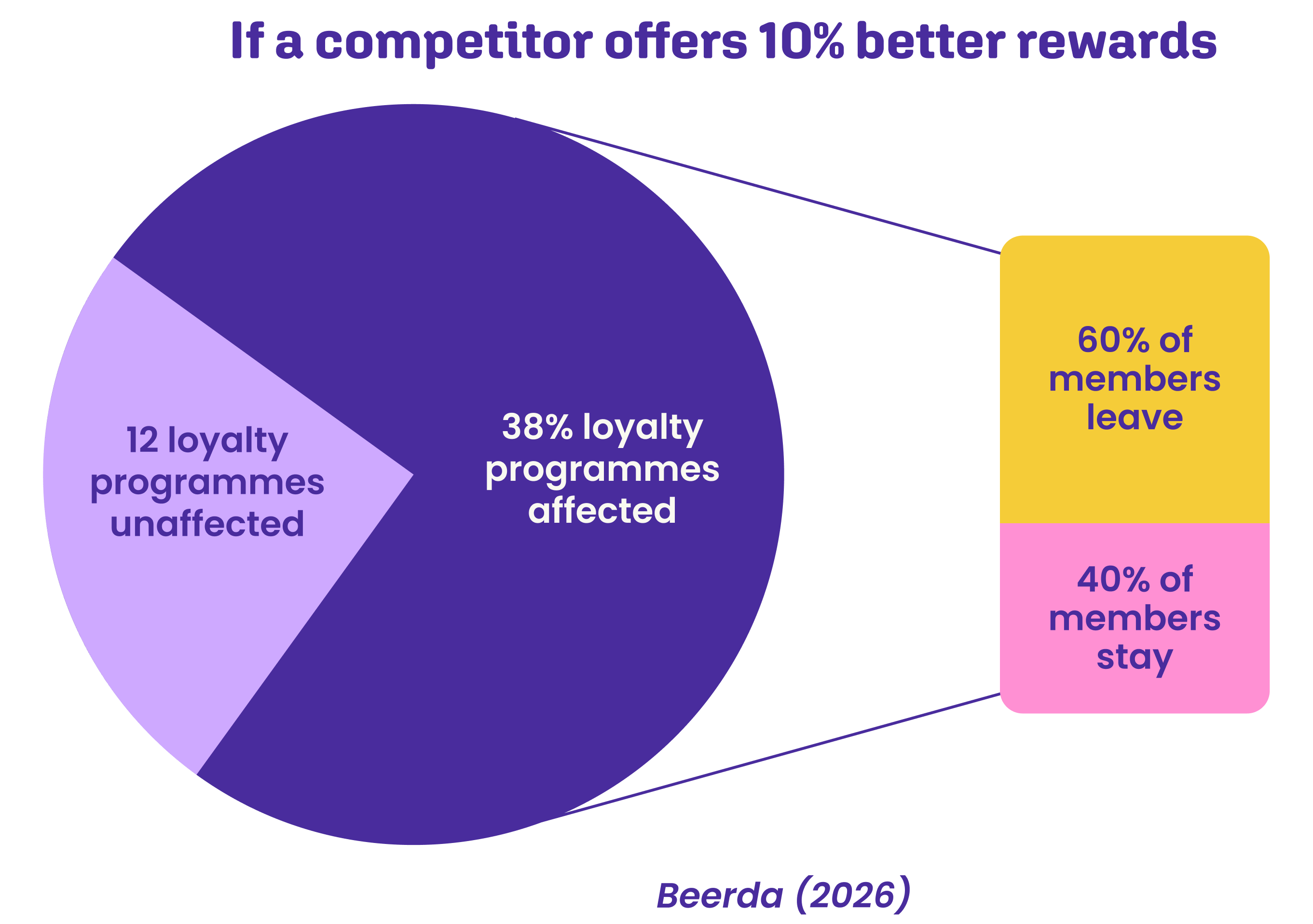
Points reward behaviour after it happens and keep the customer around only for the reward. They will leave the moment someone else offers more. What retailers can do instead is build something that feels worth coming back to. Something that creates anticipation even before the purchase. Games drive measurable results across the entire customer journey. They build brand awareness by creating memorable and shareable experiences, capture first-party data from customers who want to participate, increase basket size and purchase frequency through reward mechanics, and build the kind of emotional connection that turns occasional shoppers into loyal customers.
Humans naturally want to play. We are driven by the motivations that games create: the desire to achieve, to improve, to compete, to discover, and to be rewarded. The game mechanic needs to align with at least one of those motivations. Then, instead of pushing something onto the customer, you invite them into an experience they would choose on their own.
Games are clearly powerful, but not all game types do the same thing. Choosing the right mechanic for your goal is the deciding factor.
Luck Games
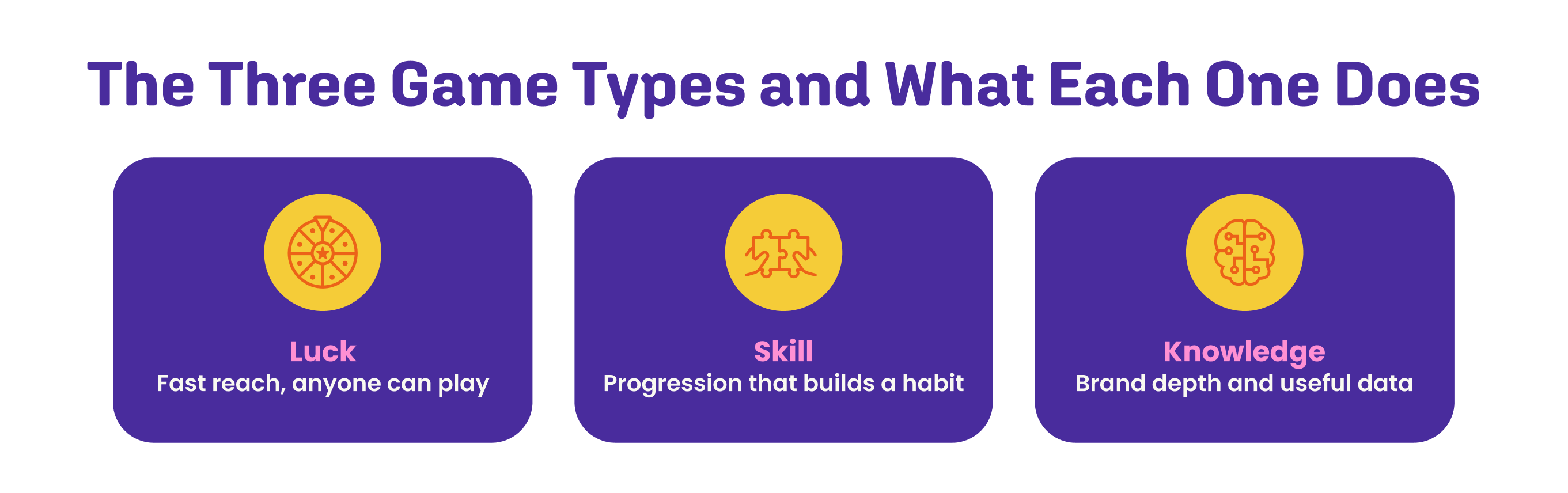
Scratch cards, spin-the-wheel, slot machines, prize draws. All are fast, create anticipation, deliver results immediately, and anyone can play them regardless of age, product knowledge, or skill. They are well suited to driving high-volume, low-friction participation, broad awareness campaigns, seasonal promotions, and moments when you simply want to generate quick excitement across your entire customer base.
That said, luck games are easily abandoned. If a customer loses multiple times in a row, there is no reason to stay. No sense of improvement, no emotional connection to the brand, and sometimes genuine frustration. Use them when your goal is fast, wide reach. They work well as seasonal campaigns, app download incentives, and post-purchase reward moments. Keep the prize structure clear and the win rate honest. Customers are more perceptive than you might expect, and they will quickly sense when there is no real point in playing. It is also worth noting that luck games need variety. Running the same format continuously tends to erode the excitement they depend on over time.
Skill Games
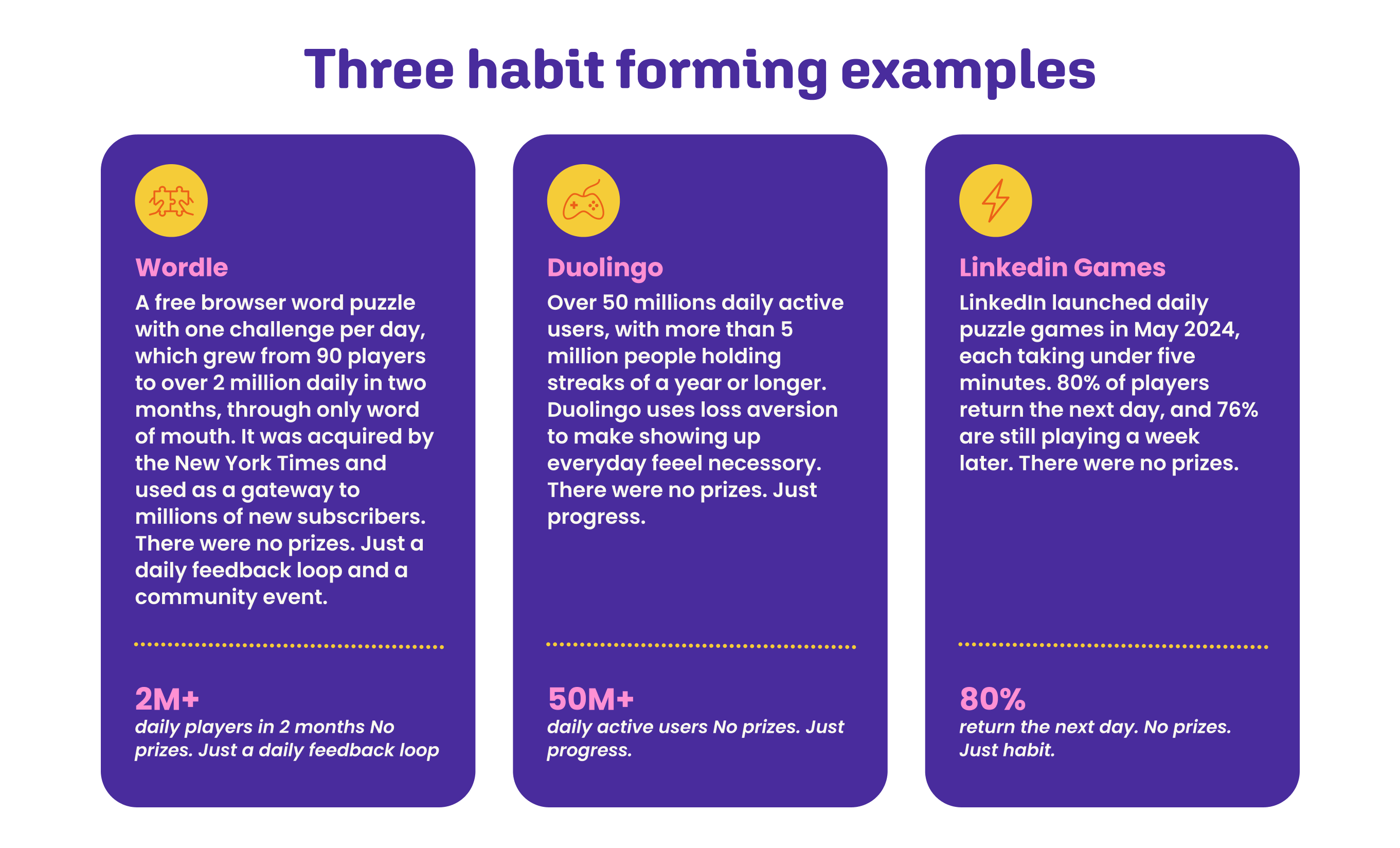
Puzzles, memory games, arcade-style challenges, reaction tests. These tap into the desire to improve, which is a powerful motivator for repeat engagement. Every time the game is played, the customer learns something new, their score improves, they climb a leaderboard. That makes the reward about more than just the prize. Progression becomes a reward in itself. This is what kept me, and millions of others, playing video games: the mastery.
Skill games are well suited to driving repeat visits and sustained engagement. A well-designed skill game in a loyalty app can become a daily habit, creating time spent in the app that no passive content can match. They also tend to attract a more engaged customer profile. The trade-off is that they ask more of the customer. They are not for everyone, and initial participation may be lower than with a simple luck game. The design needs to feel rewarding and achievable. If it is too difficult, it will frustrate rather than motivate.
Use them when you want to build habits with your most active customers, or anywhere that interaction is the goal. A skill game that resets every day gives customers a reason to open the app even when they are not shopping, making the daily reset a mechanic in its own right.
Knowledge Games
Quizzes, product finders, personality tests, prediction games. These knowledge-based formats engage a completely different cognitive mode. They do not rely on chance or reflexes. They encourage customers to think, discover, and learn, and in doing so create something distinctive: a meaningful connection between the customer and your product or brand. A "find your perfect product" quiz entertains the customer while also helping them make better decisions, influencing purchase choices in-store, and capturing preference data that feeds personalisation for months to come.
The trade-off is that they require content investment. The infrastructure takes time to build and needs to feel genuinely useful. Customers will quickly detect if it is not. Use them when you want to strengthen brand knowledge, support product discovery, or gather preference data. They work well for product launches, seasonal ranges, onboarding new loyalty members, or any moment when you want customers to leave knowing more about your brand than when they arrived. Knowledge games tend to work best as one-off or triggered events rather than daily habits.
"How often a game runs also matters. The strongest loyalty programmes do not operate on a single rhythm but run at least two game types simultaneously".
Lobyco's Cases#
Profi: Luck Game at Scale
Profi is one of Europe's fastest growing grocery retailers, expanding from around 500 stores in 2016 to close to 2,000 by 2025. Lobyco built their gamification layer in 2022, with most game prizes covered by suppliers. Their games were played 95 million times per year, with measurable uplifts in basket size and store visits during weeks when members played and won. Their "Buy and Win" basket campaign drove a +8% basket increase, with 13% of active members engaging. Four years on, engagement remains strong and commercially viable, with costs largely covered by supplier contributions.
Coop Denmark: Skill Game for Engagement
Coop Denmark runs the largest loyalty programme in Denmark, with around 880,000 monthly active users. Lobyco developed and tested a Wordle-style skill game with them. Compared to a luck game, it asks more focus and time from the player, but beyond driving app traffic it builds memory and brand affinity. The Word Hunt skill game drove significant app engagement at launch and kept players in the app longer than a standard luck game would. It became a brand tool that gave customers a genuine reason to stay.
The Real Power is Combining All Three
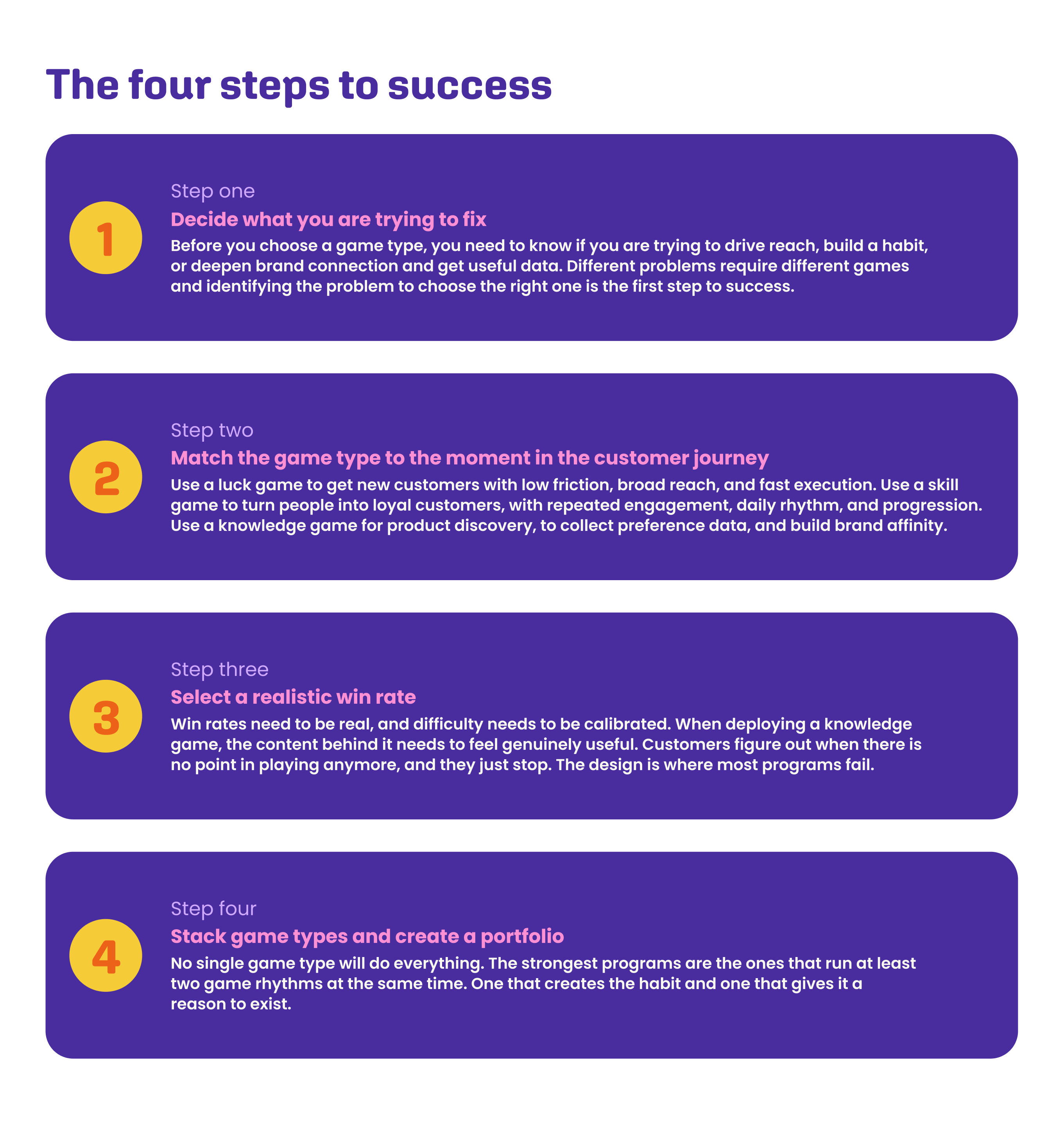
The key to getting the most out of gamification is to layer game types strategically across the customer journey. Use a luck game to attract new customers: low effort, immediate excitement. Use a skill game to convert that initial curiosity into a habit, built on repeated engagement and a sense of progression. Use a knowledge game to help customers discover products they will love, while collecting data on their preferences.
We see this approach work for our clients every day. We support all three game types because different moments in the customer journey call for different mechanics. The game serves the strategy, and choosing the right mechanic for the right moment is what creates measurable results.
The loyalty app I mentioned at the start was not a bad idea. It was a bad fit. A luck game with no variety and no realistic win rate offers nothing worth coming back for. The mechanic did not match what the moment needed.
Game type is a strategic choice. The right one moves baskets, creates habits, and earns the kind of loyalty that a simple discount never could.
References#
Beerda, J. (2026, April 28). Why Most Loyalty Programs Aren't Actually Loyalty Programs. The Octalysis Group. https://octalysisgroup.com/2026/04/why-most-loyalty-programs-arent-actually-loyalty-programs/
Duolingo Surpasses 50 Million Daily Active Users, Grows DAU 36% and Revenue 41% in Third Quarter 2025 Year over Year. (2025, November 5). Duolingo, Inc. https://investors.duolingo.com/news-releases/news-release-details/duolingo-surpasses-50-million-daily-active-users-grows-dau-36
Hutchinson, A. (2024, December 20). LinkedIn's Giving Users a Summary of Their Games Performance. Social Media Today. https://www.socialmediatoday.com/news/linkedin-puzzle-games-performance-summary/736125/
Jeijei. (2024, January 23). How Many People Play Wordle?. Fiction Horizon. https://fictionhorizon.com/how-many-people-play-wordle/
:format(webp))