
Fully Dynamic Orchestration: Turning Customer Data Into Connected Omnichannel Journeys
Loyalty March 8, 2026 5min read
:format(webp))
:format(webp))
For years, campaign execution in retail has followed a familiar pattern: define a segment, pick a channel, set a schedule, launch — and hope the assumptions hold.
That approach is increasingly at odds with how customers behave.
Customer behaviour is dynamic. Intent changes. Context shifts from moment to moment. Static campaigns built on fixed segments and timelines struggle to keep up — often leading to missed opportunities, wasted incentives, and experiences that feel disconnected.
This is why modern campaigns are no longer best understood as one-off executions. They are orchestrated journeys — responsive, connected, and continuously shaped by customer behaviour.
At the centre of that shift sits orchestration as a capability.
From static campaigns to dynamic orchestration#
Traditional campaigns rely on predefined audiences and fixed schedules. Once launched, they rarely adapt unless someone manually intervenes. This limits relevance and forces marketers to rely on guesswork: Will this audience respond? Is this the right moment? Are we pushing too hard — or not enough?
Dynamic orchestration changes that model.
Instead of locking decisions in upfront, orchestration allows campaigns to respond to what customers actually do — or don’t do — across channels and touchpoints. Journeys can start, branch, pause, or escalate based on real behaviour and context.
The result is a fundamental shift in mindset: campaigns are no longer static plans, but living journeys that evolve with the customer.
Lobyco Nexus as the orchestration engine#
Lobyco Nexus is built to support this shift by acting as a single orchestration engine where many different customer signals come together.
Rather than treating loyalty, promotions, and communications as separate disciplines, Nexus connects them through one orchestration layer. All relevant data signals flow into the same environment, where marketers design dynamic campaign flows instead of isolated campaigns.
This is where data turns into action.
Marketers don’t need to manage complexity across systems or channels. They work in one place, defining how journeys should respond as customer context changes — and letting orchestration handle the coordination.
The data inputs that power dynamic targeting#
Dynamic orchestration is only as powerful as the signals it can react to. Nexus brings together a broad range of data inputs by default, each adding a different dimension to targeting and decision-making.
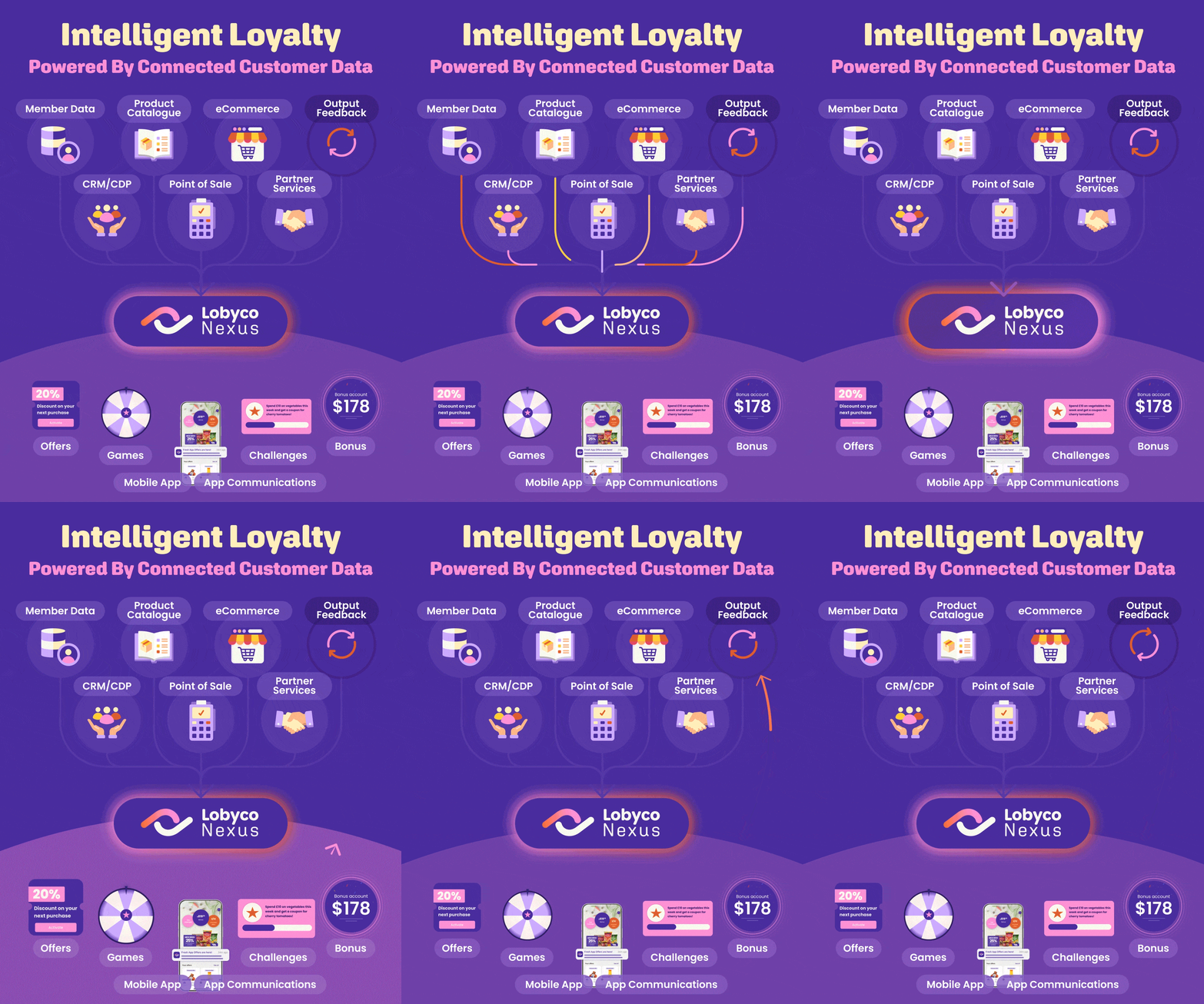
Member data such as status, engagement, and visit frequency enables targeting based on loyalty depth and relationship strength — not just demographics.
POS and eCommerce data including transactions, spend, and purchased products allow campaigns to respond directly to real purchasing behaviour.
Promotions data like activations and redemptions support smarter incentive logic and follow-up journeys that adapt based on response.
Games and challenges data such as participation and progress enable gamified, behaviour-driven journeys that reward momentum rather than one-off actions.
Bonus and rewards data including balances and expirations make it possible to deliver timely nudges and value-based reminders that feel helpful rather than intrusive.
App engagement data like usage patterns and interactions ensures relevance based on how customers actually use digital touchpoints.
Individually, each signal adds value. Combined, they enable a far more dynamic and responsive approach to targeting — one that reflects the full customer context.
CDP data as a powerful new addition#
As customer data strategies mature, many retailers rely on CDPs to unify data, build advanced segments, and generate predictive insights.
With CDP integration, this external intelligence can now also feed directly into Lobyco Nexus orchestration.
CDP-driven segments, attributes, predictive scores, and lifecycle events become additional inputs that journeys can react to — expanding what campaigns can respond to, without changing how marketers design flows.
Importantly, CDP data does not replace existing signals. It strengthens orchestration by adding another layer of insight, enriching decision-making while keeping execution unified.
What this enables in practice#
When orchestration is fully dynamic, campaigns behave differently.
Journeys can start when a meaningful signal appears, not when a calendar says so. They can branch based on engagement, pause when intent drops, or escalate when momentum builds. Targeting adapts continuously as customer context evolves.
Crucially, journeys stay connected across loyalty mechanics, promotions, and communications. Customers experience one coherent flow — not a series of disconnected messages and incentives.
This reduces assumptions and increases relevance, without increasing operational complexity.
Outcomes for marketers#
For marketers, fully dynamic orchestration delivers tangible benefits:
More relevant campaigns that reflect real customer behaviour
Better use of incentives by aligning value with intent
Less guesswork and lower investment risk
Greater confidence when scaling more complex, multi-step journeys
Dynamic orchestration is what turns rich data into consistently relevant campaigns.
By bringing diverse data signals into one connected flow — and using them to shape journeys in real time — Lobyco Nexus enables marketers to move beyond static execution and into a model where relevance is designed in, not hoped for.
:format(webp))