.png)



Loyalty programmes generate more customer data than almost any other part of retail operations. But most loyalty managers cannot access it without going through someone else first. What revenue would the business lose if the loyalty programme stopped tomorrow? Is it changing customer behaviour, or rewarding behaviour that would have happened anyway?
These are fair questions, getting harder to sidestep. The difficulty is that the data needed to answer these questions confidently is rarely within instant reach.
.png)
The conventional explanation is that loyalty ROI is genuinely hard to measure. The customers most likely to join a loyalty programme are already your best customers, which makes it difficult to isolate what the programme caused. But measurement methodology is not everything. Before you can measure something properly, you need access to the data in the first place.That is where the problem starts for most loyalty teams.
Grant Thornton found that most loyalty platforms "present a rosy picture" of performance, showing conversion rates and redemption figures while leaving out what actually informs strategy (Grant Thornton, 2023). Teams see what happened. They rarely see why, or whether the programme is driving the behaviour they think it is.
The structural reason goes deeper than platform limitations.
.png)
Data that could inform those decisions either does not reach the right people or requires a request to a data or analytics team to access. When data requires an intermediary, that discovery process slows or stops.
The human consequence of this structure is something that rarely gets directly named. Loyalty managers stop asking questions that are too slow to get answered. If investigating a dip in active customers requires a request to a data team, a multi-day wait, and then a follow-up question that restarts the whole cycle, people get discouraged to ask or stop asking after the first attempt. Decisions get made on instinct, and campaigns get designed around what worked last time.
This matters more than one might think.
.png)
The teams best positioned to respond are the ones who can see it happening and investigate why. Most cannot.
The problem is not that loyalty data does not exist. Every transaction, every redemption, and every campaign generate it. The problem is that the data lives outside the daily workflow of the people who need it, and getting answers requires going through someone else. That dependency shapes what questions get asked. If any at all.
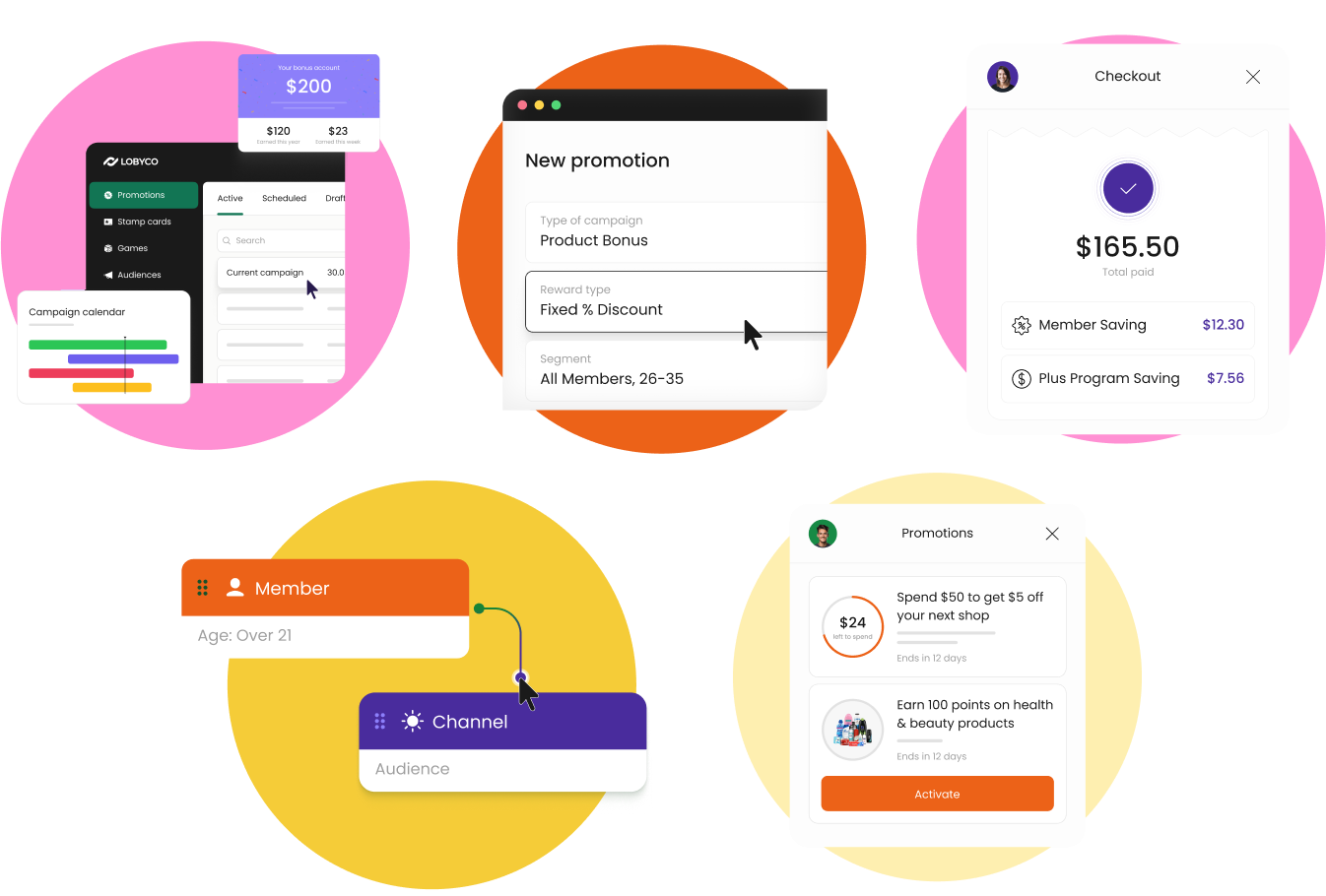
Insights, Lobyco’s new data space within Nexus, is built around the assumption that the people running a loyalty programme should be able to see their own programme data without asking for permission.
The Overview gives loyalty managers a daily-refreshed snapshot of programme health, covering active members, sales, and campaign activity, updated automatically without a report being pulled or a request being raised. The loyalty manager who notices a dip on Monday no longer needs to wait until Friday to act.
AI Genie goes further. Teams can ask questions in plain language and get answers in seconds with supporting data. Why did active members fall last month? Which segment is responding to the campaign? Questions that previously required a data team request can be answered directly.
The dependency on a data team does not entirely disappear. But routine investigation no longer requires it. Decisions are made on evidence. Finance gets clearer answers. Campaigns get built on something more reliable than what worked last time.
Callaghan, S., Johnson, R., & George, K. L. (2022, October 5). Keeping pace with change: Insights from the core of consumer companies. McKinsey & Company. https://www.mckinsey.com/industries/retail/our-insights/keeping-pace-with-change-insights-from-the-core-of-consumer-companies
Camden, P., & Anders, M. (2024, December 20). How to unlock value from, measure and demonstrate loyalty program ROI. EY. https://www.ey.com/en_us/cmo/how-to-measure-and-demonstrate-loyalty-program-roi
Murali, R., O’Connell, D., Spiel, J., Rogers, S., & Skelly, L. (2026, January 12). Reshaping loyalty programs in an era of value-seeking. Deloitte. https://www.deloitte.com/us/en/insights/industry/retail-distribution/reshaping-customer-loyalty-programs.html
New loyalty program analytics lead to better strategies. (2023, February 28). Grant Thornton. https://www.grantthornton.com/insights/articles/advisory/2023/new-loyalty-program-analytics-lead-to-better-strategies